The southpaw stance in boxing, explained
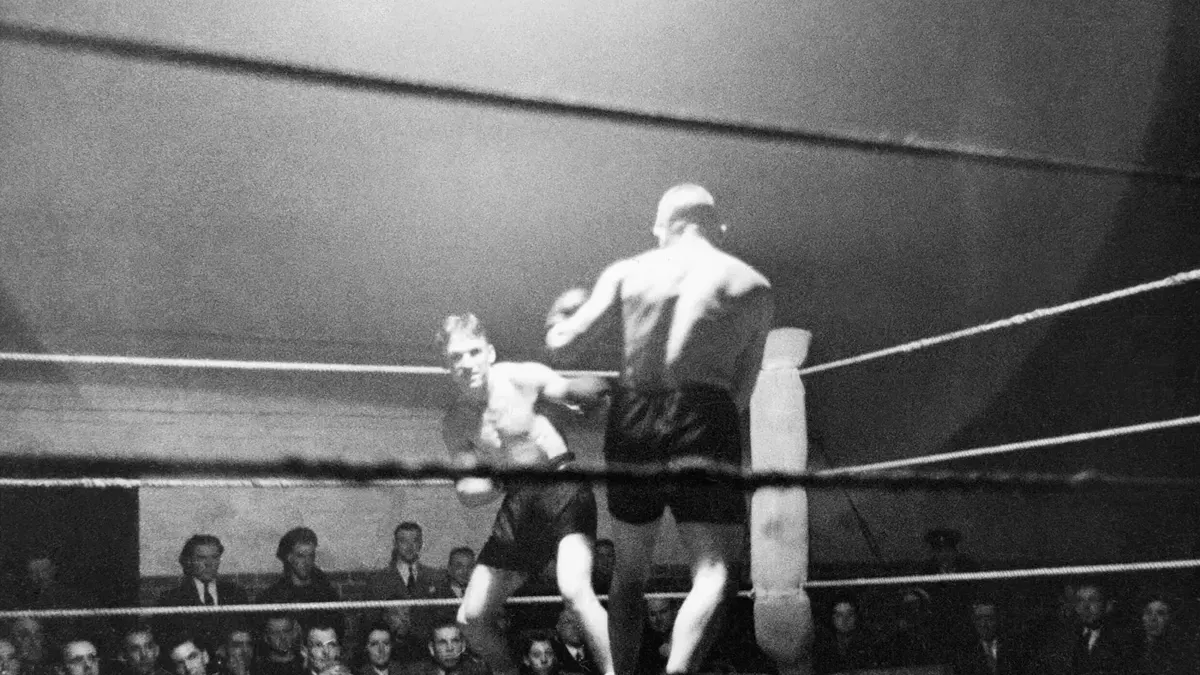
If you’ve been training a while, the southpaw stance is usually the first thing that makes you rethink what you’ve learned, normally after somebody in the gym has made an orthodox boxer look silly for three rounds.
It’s worth knowing about whether you’re left-handed or not, because most of what decides a southpaw fight happens below the waist rather than with the hands.
TL;DR: a southpaw leads with the right hand and right foot, and the left hand is the power hand. There are more left-handers in pro boxing than in the general public, and they win slightly more often. Most of the fight comes down to whose lead foot ends up on the outside.
What the southpaw stance actually means
A southpaw has the right hand and right foot forward, jabs with the right, and throws the left as the power hand. It’s the mirror image of orthodox, and it’s the natural stance for most left-handed people.
The name comes from baseball, where diamonds were laid out with the batter facing east so the afternoon sun wasn’t in his eyes. That put a left-handed pitcher’s throwing arm on the south side. The word was already being used to mean “not-usual” before that, so the baseball story is probably tidier than the truth.
Do southpaws really have an advantage?
Yes, and you can put a number on it, though it’s smaller than gym talk suggests.
Thomas Richardson and Tucker Gilman looked at nearly 9,800 pro fighters in 2019, across male boxing, female boxing and MMA. Left-handers made up 17.3 percent of male boxers, against roughly 11 to 12.6 percent of everyone else, and the same gap showed up in all three groups.
They also won more. Male southpaws took 52.5 percent of their fights, and their BoxRec scores were higher too. Among female boxers the scores were higher but the win rate fell just short of the mark that counts as solid.
So the edge is real and it’s a few points, not a magic trick. The usual reason given is simply that there aren’t many of them. An orthodox boxer spars other orthodox boxers almost every session and has built years of timing against that shape. A southpaw has spent their whole career fighting people who have never practised against them.
The lead foot battle
This is the part that actually decides southpaw fights, and it gets far less attention than it deserves.
When two orthodox boxers meet, their lead feet line up on their own. When a southpaw meets an orthodox boxer, both of them are trying to get their lead foot on the outside of the other’s at the same time. Whoever wins that gets a clear line for their power hand and takes their opponent’s away.

If you’re orthodox against a southpaw, your safe ground is to your left, away from their back hand. Circle that way and their lead hook has no leverage on you. If you’re the southpaw, it’s the mirror: your safe ground is to your right, away from the orthodox back hand.
The useful detail is that when you move away from that safe side, step back slightly as you go. Their rear hand falls short, and you’re already set to answer with yours.
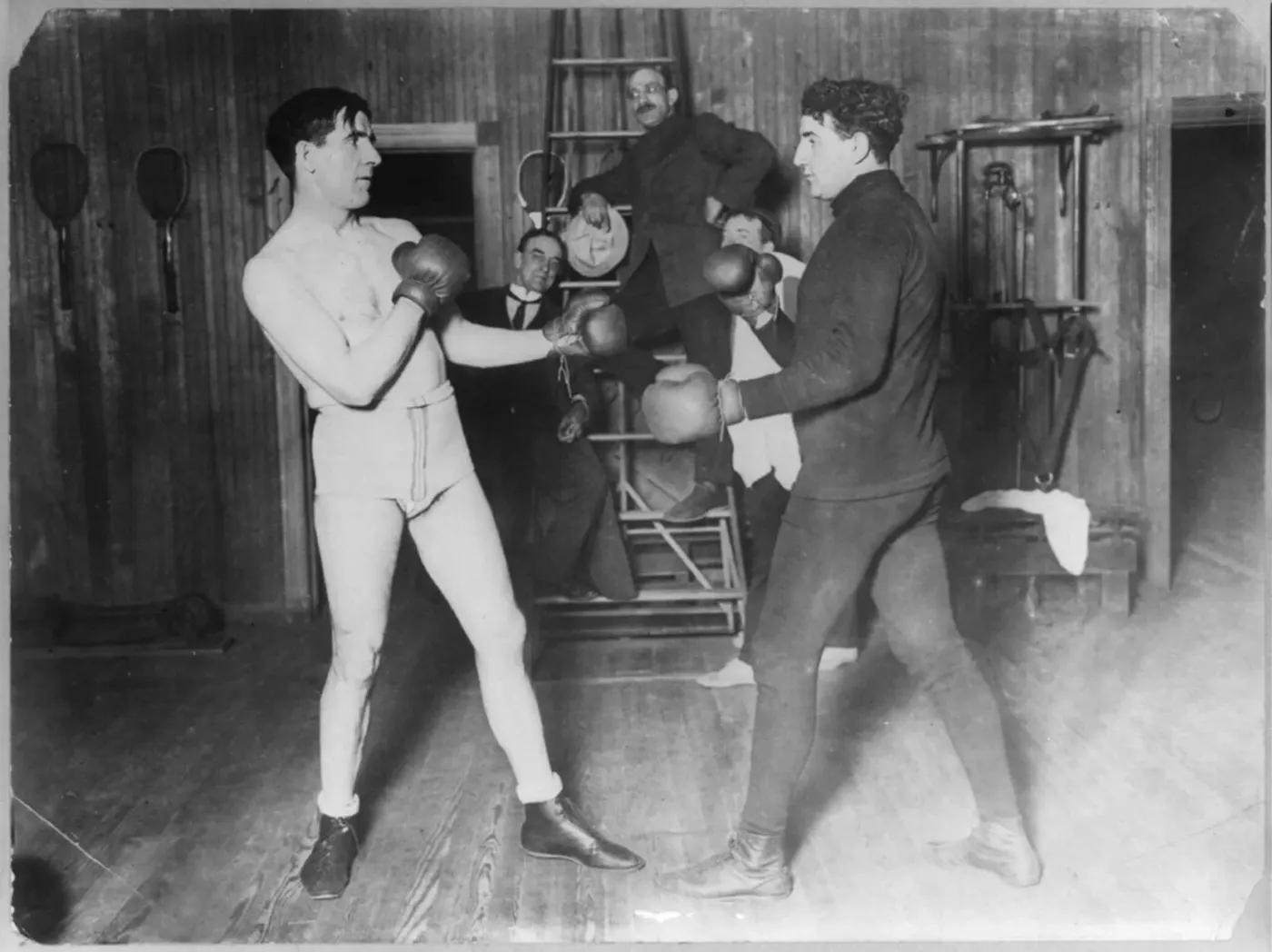
What to work on if you’re orthodox
Ask to spar southpaws deliberately rather than avoiding them. It’s uncomfortable at first and it’s the only thing that fixes the problem, because the problem is that it feels strange, not that it’s hard. Several of the fights in our piece on great boxing matches turn on exactly this problem.
Your right hand needs to travel a slightly different line to land, and your lead hook usually needs to come around rather than straight across. Most orthodox boxers keep throwing the shapes that work against orthodox opponents and wonder why nothing connects.
The jab is the other thing to look at. Against another orthodox boxer your jab meets theirs in the middle, and you get used to that contact telling you where they are. Against a southpaw there’s nothing in the middle, so your jab arrives without the usual warning and theirs does the same to you. Some coaches have you jab to the shoulder rather than the head for a while, purely to get comfortable occupying that space again.
What to work on if you’re southpaw
The same thing, in reverse. Your advantage shrinks against anyone who spars southpaws regularly, so don’t build a game that depends on the other person being confused.
Your right jab is doing more work than an orthodox jab does, because it’s the hand closest to their lead hand and it’s how you win the outside position. Southpaws who neglect it tend to rely on the left and get countered.
It’s also worth knowing that the advantage in the numbers comes from being rare rather than from anything about the stance itself. At the top of the sport, where everyone has sparred southpaws for years, it thins out. So treat it as a head start in the amateurs rather than something to build a career on.
How to practise it without a southpaw partner
Most gyms have one or two southpaws and everybody wants to avoid them, so getting rounds is harder than it should be.
If you can’t get a partner, shadow box a southpaw. Picture their lead foot on the opposite side and work on stepping outside it, which is the part your body needs to learn rather than your hands. Our shadow boxing combos are a place to start if you want a structured round rather than freestyling it. A few rounds a week of that makes the first real southpaw spar much less confusing.
The other option is to spend a round or two in the opposite stance yourself. It feels terrible and that’s the point, because it shows you exactly what the southpaw is dealing with every session and where the openings sit.
Should a left-hander box orthodox?
Plenty do, and it works. Fighting orthodox puts your stronger hand in the lead, which tends to build a heavier and more accurate jab, and that’s a real weapon.
Neither answer is wrong. What costs you is switching after a year or two, because the footwork has to be relearned from scratch. Pick one early and stay with it. A handful of boxing footwork exercises run in your actual stance is what makes that choice, or a later switch, hold up under pressure rather than just on paper.
Whichever stance you settle on, it gets tested for real the first time someone is scoring you rather than a mirror. Amateur boxing fights covers how that first bout is actually judged.
None of this holds up if the fundamentals underneath it are shaky. Our guide to basic boxing techniques covers the stance, guard, footwork and distance work that any stance choice, orthodox or southpaw, is built on top of.
Stance is only one part of what separates a good fighter from a great one. Our piece on the best boxers ever looks at what actually put four of them at the top of the sport.
Whichever stance you settle on, our Athletic range is cut close for training in and the Essentials range is the heavier cotton for before and after.
Common questions
What is a southpaw in boxing?
A southpaw leads with the right hand and right foot, and keeps the left hand back as the power hand. It is the mirror image of the orthodox stance and it is the natural stance for most left-handers.
Do southpaws have an advantage in boxing?
The evidence says yes, though a small one. A 2019 study of nearly 9,800 professional fighters found left-handers made up 17.3 percent of male boxers against roughly 11 to 12.6 percent of the general population, and they won 52.5 percent of the time.
Why are southpaws harder to fight?
Mostly because orthodox boxers rarely spar them. Every angle is mirrored, so the timing an orthodox fighter has built over years lands slightly wrong.
Should a left-hander box orthodox instead?
Plenty do and it works. Fighting orthodox puts your stronger hand in the lead, which builds a heavier jab. Neither choice is wrong, but switching later costs months, so pick one early and stay.